Showing posts with label current events. Show all posts

Wednesday, January 25, 2017

This is the way the world ends: the problem no one is talking about

Yesterday my friend Mary Susan asked me if I thought all the controversy surrounding Donald Trump was meant to distract the American public from something much more important.

I enjoy a good government conspiracy plot as much as the next girl, but at just two days into a Trump presidency, even I felt that we were seeing the worst unfold right before our eyes.

America had gone from ‘post racial’ to ‘post factual’ faster than you could say Hollywood divorce. Both Presidential candidates were embroiled in scandals worse than Watergate, and rumors abound of international tampering with election results. How much worse could things get?

Still, Mary Susan’s concerns kept me up late last night, scrolling and trolling social media for any nefarious plot to (further) undermine our way of life that I might have missed. At four thirty-five, I found it.

House Resolution 193 aka The American Sovereignty Restoration Act was introduced twenty one days ago by Representative Mike Rogers (R-AL). It is a detailed blueprint for withdrawing the United States from the United Nations and arguably the most dangerous piece of legislation written since the Fugitive Slave Act. This resolution, if passed, will (in part):

1. Allow the President to pull out of the United Nations (henceforth UN)
2. Evict the UN Headquarters from New York
3. Terminate US funding and participation in UN Peacekeeping efforts.
4. Repeal diplomatic immunity AND bar UN members from gaining diplomatic immunity in the future
5. Withdraw US from United Nations Educational, Scientific, and Cultural Organisation (UNSECO)
5. Withdraw US from the World Health Organization (WHO)
6. Repeal all UN Conventions and agreements

This piece of legislation has the potential to cause World War Three, yet only six websites are talking about it. Six websites. To put that in perspective, over twenty five articles on reparations were published within a week of Ta Nehisi Coates’ criticism of Senator Bernie Sanders. Thirty one articles were published (so far) this year on Kim Kardashian’s robbery. Twenty three articles were published about Kellyanne Conway’s inauguration coat. Yet this critical piece of legislation that is both an insult to our nation’s legacy and a threat to her future has been quietly referred to the House Committee on Foreign Affairs without so much as a peep from either liberal or conservative media sources.

The implications of The American Sovereignty Restoration Act are far reaching and pose a threat to all Americans-- from our soldiers who depend on humane treatment as prisoners of war as outlined in the Geneva Convention to artists whose intellectual property is protected by the Berne convention.

While one could posit that removing obligatory accountability on the part of the United States to adhering to international human rights, child labor, and environmental regulations could be good for big business, we must also ask ourselves: at what cost? Are we willing to go back to children dying of black lung in Appalachian coal mines? Are we willing to bring back biological warfare, which, as the Tuskegee Experiment proved, was often tested on our own citizens of color? How about the “higher standards of living, full employment, and socio-economic progress” laid out in Article nine of the United Nations charter? Is that no longer something we as Americans ascribe to?

Our country is far from perfect. As a black woman, I am personally and painfully aware of many of the ways America fails her most vulnerable on a daily basis. Yet I fervently believe that at its core, our nation's citizens agree on the ideals of freedom, peace, human dignity, and prosperity. Though we may disagree on best way to make these ideals a reality, though we may fail to ensure access to these ideals for all of our citizens, these principles remain our Northern Star, the light on the horizon that guides us towards home.

Following that light convinced President Franklin D. Roosevelt and twenty five other world leaders to take a collective stand against fascism in 1942 and form what would eventually become the United Nations.

Every man, woman, and child who believes in freedom and human rights depends on the United Nations and the international peace treaties it painstakingly upholds. For over seven decades, America has been an integral part of maintaining that peace. Now, with HR 193 before us and an uncertain future ahead, one cannot help but wonder:

Is this the way the world ends?

Saturday, October 1, 2016

Safety Recall: A defective product of State


When I was a little girl, I had a Roller skating Christie doll. Christie was Barbie’s brown friend, for those of you who did not have the good fortune to come of age during the ‘highly progressive’ nineties.
Christie was fairly identical to Barbie in every way except coloring. Her lips, hips, and hairstyle were exactly the same as Barbie’s, she just happened to be brown. It is worth mentioning that all my Barbies were Christies-- my mother(an Art History major) didn’t believe in the idealized body image that Barbie represented, and made exceptions only because my Aunt (A Black Studies minor) insisted that having black toys was germane to positive self identity in black children.

Hence, roller skating Christie.

I loved that doll. Her purple roller skates trailed sparks and the slight scent of butane as I dragged her back and forth across the hardwood floor of our living room. If I dragged her fast enough, I could make her long hair flow in the breeze, mahogany locks streaming out behind her like a Soft Sheen Carson ad.

One of the greatest disappointments of my early childhood was the day my Aunt came for a visit and took my roller skating Christie away. She explained that a little girl in Mississippi’s roller skating Barbie has malfunctioned-- the sparks from her skates caught her brother on fire, and that the little girl and her brother were hurt and now they were recalling the doll.

Even at eight years old, I was already a bit of a jackass. Although I understood what she was telling me, I was confident that none of these issues applied to my Christie. Firstly, It was Barbie that caught fire, not Christie. And I didn’t have a brother or sister-- just my precious dolls. But most importantly, my Christie functioned fine. And just because other people’s dolls didn’t work right didn’t mean she should take my Christie away, that was like punishing me for someone else’s mistake, and that would be wrong.

I patiently explained to my Aunt that while the incident in Mississippi was unfortunate and I hoped the little girl and her brother were alright, this had little to do with my Christie doll. It was a Barbie issue and a people with siblings issue, and I had neither, so it simply did not apply to this situation.

She laughed, urged my mother to send me to law school (again), and took the doll anyway, promising to bring me a new one on her next visit. I was so upset by the fiasco that I swore off Christies, shaving and removing the heads of all my other dolls so my mother would know I was serious. Who needed a toy to grow attached to when some grown up could come along and take it away? No, it was better to my eight year old mind to stick with books, whose secrets, once revealed, were mine forever.

Twenty three years and countless hours of therapy has given me a bit of perspective on this issue. As a small business owner, I am now intimately familiar with safety recalls and understand why they exist: when a product fails to function as intended, posing a danger to one consumer, the entire product line presents a potential danger to all consumers. Even if a consumer’s product works perfectly, it could be just a matter of time before it malfunctions and causes someone to be harmed.

I awoke this morning on the cusp of epiphany: This country needs a police recall.

Eight hundred and sixty six people have been killed by police this year. The circumstances surrounding their deaths are of little relevance, just as the fact that the children in Mississippi were somehow coated in hairspray before playing with Roller Skating Barbie. The individual circumstances do not negate the inherent danger of the product-- a Barbie doll is not supposed to set a child on fire. And the police are not supposed to ‘accidentally’ kill unarmed citizens.

Think about it. If police were a product, one such incidence would be enough to justify a recall of the entire line.

Imagine, if Tamir Rice’s toy guy backfired and somehow killed him, what the consequences would be for the manufacturer. A recall would be issued, amidst public outcry. An investigation would be launched into every step of the manufacturing and quality control process to find out how a defective product got to market in the first place. Other toy gun manufacturers would be subject to scrutiny and would be put in the uncomfortable position of proving that their toys were safe. Tamir’s family would get a check, perhaps even a scholarship fund established in his name, signifying the toy manufacturer’s commitment to product safety.

Why then, do we hold our police to a lower standard of accountability than we do privately held companies?

Police Officers may be individuals (just as my Christie doll was an individual to me), but ‘police’ as an entity are a product of the state (as an entity). Their function, ostensibly is to uphold the law and protect citizens. They are supposed to be the same, act the same, treat everyone the same-- that’s why they wear uniforms. Yet every other day we are reminded that the product of our great nation state is defective-- it regularly functions in a manner other than intended, with dangerous consequences to the (taxpayer/) consumer.

Imagine if your toaster set your house on fire with every thousandth slice of bread. If your shower hose strangled you, but only sporadically. If you car exploded when you clicked the doors-- every once in awhile.

Would you accept the explanations most of these toasters never set houses on fire at all; sometimes a shower hose has a bad day; millions of people lock and unlock their cars every day, and very few of them explode-- or would you demand the manufacturer be held accountable for their defective products?

Unless your name is Ben Brucato, we can all agree that the institution of police as a product of our nation-state is defective. The question is, when will we, the taxpayer/consumers, finally demand a recall?

Sunday, August 7, 2016

The Lost Files: December 2015


A while back I promised you guys I would publish some of my thoughts I wasn't brave enough to share with you in the past. I'm making good on that today. So here is an uncut, unedited entry I started on December 13, 2015 and never quite finished. Perhaps because this story is still playing out on cell phones, laptops, and TV screens across the country. Enjoy.
_____________________________________________________________________

I should be asleep. I want to be. But I can’t. I have thirty seven names running through my head, reminding me that threat of terrorism is now my way of life.

3SB:
  • I was in tenth grade when 9/11 happened.
  • I went to a hoity toity prep school in Gates Mills
  • I lived in East Cleveland.

The juxtaposition of my ‘normal’, neighborhood life and the brave new world that was Hawken was never made more clear than on September 11, 2001. I was sitting in the computer lab when an image of the blazing twin towers enveloped the screen. We all thought it was yet another cleverly executed prank pulled off by our then anonymous student hacker- a disruptive f*(@ you towards the establishment of regimented block scheduling and standardized testing.

By the time the second plane hit, we realized this was no laughing matter. I should say my mind went immediately to the safety of ,my family- my Aunt worked downtown and Cleveland had been listed as a potential target city, but I was sixteen and in love with the idea of love, so my first thoughts were of Jerry X, a businessman’s son with a poetic soul who was doing his senior project in New York City.

My concept of the world was embarrassingly small at the time. New York City to me meant right next door to the Twin Towers, maybe even in the Twin Towers. Jerry’s Dad was an Important Man, so his finance internship had to bring him to the Twin Towers on an almost daily basis, my juvenile mind reasoned.

My campus was locked down. Terrified parents were demanding the school send us home, but for our safety, we were confined to the building. Cell phones, which were still pretty much a new thing, were down. No one knew anything except that the TERROR ALERT was red.

kerry-afp.jpg

School lifted the lockdown eventually and sent us all home. Jerry X was fine and so was my aunt. Our trip to the International  Choral Festival in Prague was canceled due to safety concerns. And there was an evening, and there was a morning, a new day.

Life went on. At least, it did in my neighborhood. There was no fear of terrorist retaliation in EC. We knew our worth as victims was equal to our worth as citizens: zero.

Even at sixteen years old I was able to grasp the simple concept of relative danger: I felt safer at home than I did at school.

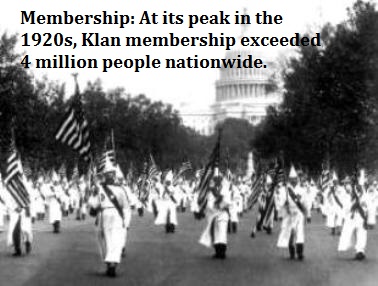
Fear is an interesting thing: the amount you feel is directly relative to the perceived feasibility of the threat to you and your close associates. For white America, the fear of foreign terrorism is salient. Their status as default Americans makes them likely targets for the mentally disturbed subset of extremist ideologues to vent their hatred on.

For black America, the threat of domestic terrorism is much more primary than foreign extremism, the probability of being killed by police in one’s own neighborhood far more tangible than the imagined peril of being blown up by the owner of the local bodega.

kkk-washington-1920s.jpg

This is MY ISIS, and it’s nothing new.

Your terrorists are hunted down through means ethical and unethical. Ours are placed on paid administrative leave. Think about that for a minute. People suspected of domestic terrorism are actually paid by taxpayers while their involvement is decided.

Yeah, that just happens. Everyday.

Where is the paid leave for Syed Farook? Oh wait, he’s dead.

His voice is just one of the forty I have haunting my brain, the unnamed masses that have been killed by police this month.

Did I say thirty seven earlier? Oh yeah, it’s gone up since I started writing.

I have a friend, a mother figure of sorts, whose nephew was killed by police a few days ago. I went online to find out more details about the case, having heard about it through another friend and not wanting to pry secondhand. I wanted to find his name so I could pray for his family and friends.

Instead, I found forty pair of sightless eyes staring at me in accusation.

As I wrote down the names of these men and women aged 18 to 66, the quiet seething storm of rage began to brew in me.

Prayer was not enough. Writing their names not enough. Blogging (even outside the box), is not enough. Justice, like international terrorism seems a distant dream when faced with stories like that of Robert Hinton, a former Rikers inmate who was awarded a sizable settlement when correctional officers hogtied and beat him for fun.

Hinton’s case led to five firings and nearly half a million in cold, hard cash from the city. Unfortunately, Hinton was killed just blocks away from Rikers, weeks before he was to receive his remunerations check.

He was a father. He was a fighter. He was a nigger.

Only I am too. How am I supposed to sleep knowing the terrorists are out there, laying in wait for me and my people,  with guns and the full support of the United States government?

I can’t. I promised to Choose Change, but in the face of such insurmountable odds, beneath the clouds of structural racism, what woman can see the silver lining?

The forty men and women who have lost their lives at the hands of police in December are victims 1088-1127 since January of this year- eight times the amount of people killed in the Paris attacks. How much more are we supposed to take? Which black body will be the last straw, the spark that sends a deeply racially divided country up in flames?

down the rabbit hole.jpg

The issue seems too large, and the more I discover, the less I realize I knew. I’m spiraling out, or, as my bestie would say, going down the rabbit hole. I find myself on the FBI vault, reading reports about how white supremacist organizations have been infiltrating police stations since 2006 using a technique the Feds call ‘ghost-skinning’. To further complicate matters, the same prosecutors that depend on police cooperation to win cases are responsible for bringing charges against the very officers who ensure their paychecks.

The system has not been corrupted, it is corrupt. Policing in the United States is rooted in the control and dominion over brown bodies. According to encyclopedia.com, the colonies relied mainly on a system of community policing called night watches.

“In addition to night watch systems, there were sheriffs appointed by the governor and constables elected by the people. These individuals were responsible for maintaining order and providing other services. [Researchers] Nalla and Newman have described the following as problems plaguing colonial cities that were considered the responsibility of police: controlling slaves and Indians; maintaining order; regulating specialized functions such as selling in the market and delivering goods; maintaining health and sanitation; managing pests and other animals; ensuring the orderly use of streets by vehicles; controlling liquor, gambling, vice, and weapons; and keeping watch for fires.”

Note that the primary responsibility of our earliest police officers was to control black and brown bodies. The racial residue from the institution’s inception persists in modern day, reminding me that black and brown bodies have not been criminalized- they are (and always have been) criminal.

The highly militarized tactics we employ in policing black and brown bodies have become the proverbial ‘backfiring gun’ in America’s face. Out of the 1,140  Americans killed by police so far this year, more than half of them were white. Most were Christians. Eighteen were children. This is not Justice.


I’m used to fighting the system. I’ve been doing it all my life. Reality has tempered my idealism to the point where I am no longer surprised by Pyrrhic victories. But I have no idea what to do when the system itself is the problem, when there is no victory, hollow or otherwise, to be had. If White lives don’t matter-- if Jeremy Mardis’ life doesn’t matter, black and brown lives don’t stand a chance.

change cats.jpgI’m ready to give up when a scripture comes to mind: ““Be strong and courageous, and do the work. Do not be afraid or discouraged, for the Lord God, my God, is with you. He will not fail you or forsake you until all the work... is finished.” (1 Chronicles 28:20) .


I chose change and I’m sticking to it if the police it kills me. I don’t have any answers yet,  just a burning feeling in my gut and plenty of questions. I force myself to lay down, zen out, and get some rest before sunrise. I’m going to need it. I’ve got work to do.


12.30.15

I walked away from this hoping that prayer and a steady diet of positive quotes would make things better. I even started another post about women and politics (my number two and three favorites to write about) and why Hillary will never be President.

I had the best of intentions, I promise. But then the Sandra Bland verdict came out. I am reminded of Roxane Gay’s eloquently condemning op ed for the Times last July where she said: “As a black woman, I feel this tragedy through the marrow of my bones. We all should, regardless of the identities we inhabit.”

Two days later, the Tamir Rice verdict was released.

This visceral loss is no longer something I can continue to ‘wait for an appropriate time’ to discuss. I am both unwilling and unable to be that patient.

Writers like Roxane Gay and Ta Nehisi Coates have the cloak of publicity to shield them from recompense when writing about the physicality of racism. Somehow, I doubt my meager readership qualifies as sufficient insulation. So when I speak about Sandra Bland, I do it with full cognizance that I am Sandra Bland, that if I am killed, no justice is forthcoming for my corpse, and that in some ways people will feel that I was asking for it.

I’m going to do it anyway. I’m going to keep at it because while death is a certainty, living free is not.

Friday, February 12, 2016

Openly Black: Is it safe to come out yet?

If you’re new to the BOTB and the sensitive type, you probably shouldn’t start with this post. Also I don’t really give warnings, so that’s pretty much the most you’ll ever get out of me going forward.


It’s February, and things are getting pretty black around here.


There are moments in life when you find yourself measuring time in increments of ‘before’ and ‘after’. February 2016 is already shaping up to be one of those moments for me. First, America  renewed my faith in democracy by saying NO to Trump. Then, Ta-Nehisi Coates criticized Bernie in such a way that over thirty new articles on reparations were written in under 15 days. Meanwhile, Cam Newton was busy being mistaken for Huey P. Newton because he had the audacity to enjoy being damn good at his job.


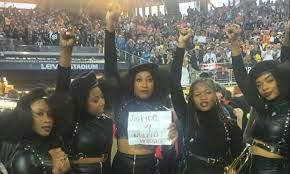
But the kicker, the moment that made it ‘before 2.16’ and ‘after 2.16’ in my mind was Beyonce’s live transition from consciousness in art to conscious artist as seen at super bowl fifty.


In case you have been living under a rock somewhere, here’s a quick 3SB on the whole SB50/HovNBey drama


3SB (Three Second Background)

  1. On Friday the 5th, Jay Z donated $1.5 million to Black Lives Matter
  2. On Saturday the 6th, Beyonce surprised the internet by dropping this lovely Ode to Blackness:
    Beyoncé - Formation (Dirty) from Michael Wells on Vimeo.


 3. On Sunday the 6th, Beyonce performed at the Super bowl, and her dancers wore this:


backup dancers guardian uk.jpg
Courtesy of Twitter


Yeah, so like I said, it’s getting pretty black around here; and some white people are not taking it very well. Like, boycott Beyonce not well. Former New York mayor Rudy Giuliani said he thought it was rude of Beyonce to use the super bowl to “attack the police.”


Now, this is where things get interesting. Why is it that when we are discussing the words or actions of a person of color, ‘criticize’ and ‘attack’ suddenly become synonymous? Coates took heavy criticism from his peers for his ‘attack’ of Bernie Sanders, even though every one of his articles specifically stated that he agreed with Senator Sanders on several issues. Beyonce, by speaking out about the unchecked slaughter of black and brown bodies, is perceived as ‘attacking’ the police.


An old adage comes to mind: don’t bite the hand that feeds you.


White supremacy thrives on an illusion of equality maintained through a system of black exceptionalism. By this I mean if there is no hope that one can become rich enough to ‘transcend race’, no Oprahs, Obamas, and Kanyes, the natives become restless.


It’s a delicate balancing act. Statistically speaking, whites are only comfortable with 8-10% nonwhite people in a given sphere. (So basically, Booker T. was right all along.) The unwritten rule of black exceptionalism is conformity to white normative ideas of blackness. Most importantly, blacks in the public sphere must strive to never remind people that they are in fact, black.


If they are rich and still black, then integration has failed. If they do choose to remind people that they are black, they must do it in such a way that makes blacks the butt of the joke (i.e. Kanye West, Flava Flav, Dennis Rodman). This rule has held true for so long we as blacks no longer even question it.


When discussing the Coates/Johnson argument with someone way smarter than me who’s been at this way longer than I have, they remarked: “Even (Barack) Obama can’t afford to be openly pro-black in this political climate.”
The weight of this bitter truth hit me like a paintball to the boob. We have a black president, yet at his final State of the Union address, he tap danced around the slaughter of the people who elected him and said something that basically equated to ‘all lives matter’.


I understood the choice. The president has an aggressive climate agenda, and he decided to prioritize the continued  existence of the planet over the concerns of one subset of his constituency.


Before February, I had come to terms with a black President that couldn’t openly advocate for black Americans. I was alright with a Presidential hopeful that sidestepped race in favor of political expediency. I was okay with waiting. But that was before I realized that I too, like my negro nose with Jackson five nostrils.


Before I started asking unthinkable questions, like:


  • If the richest 62 people could pay the deficit twice over and still have money left for an island or ten, why can’t we afford reparations?
  • Why is what Beyonce did an ‘attack’, and what Ammon Bundy did a ‘protest’? Neither took hostages.
  • Why are we only indicting Asian male police officers? Are Asians considered less white than I thought? Is this part of a larger agenda to divide and conquer minorities?
  • Are blacks really better off than we were before Civil Rights? Economically? Socially?
  • Why is George Washington a hero and Malcolm X a radical?
  • Why is it okay for a man to become a woman who loves women, but not for a black person to speak openly about black issues?
  • Why is it okay to be proud of being country, but ‘ghetto’ to be proud of being from the hood?
  • Why are black features adored on everything but black women (and men)?
  • Why do white journalists get to be individuals and black journalists have to be intellectuals/activists?
  • If we’re all Africans like Meryl Streep said (which we are), why isn’t African history studied worldwide?


... and while we’re at it


  • If we really care about drug epidemics, why aren’t we drone striking fields of poppies?
  • Why do grocery stores throw away food when 1 in 4 American children are starving? Other countries have laws against things like that.


I don’t have all the answers. But as black and white consciousness rises, I realize with pride that I am living in times where it’s (sorta) okay to ask the questions. 2.16 isn’t even halfway over, and already America has started a real conversation about race that is 400 years past due.


Perhaps the limits of our collective conscription have finally been reached. Perhaps, after the initial shock wears off, openly black Americans will find the type of reluctant acceptance that openly gay Americans now enjoy(?).


Or maybe Beyonce will get assassinated by a rabid ‘patriot’. It really could go either way.


One things is abundantly clear though: before 2.16, race was America’s worst kept dirty little secret. Now, by strokes subtle and bold, blacks of all flavors are finally starting to come out of the closet.

Friday, January 22, 2016

Choosing Change Part II: Fixing Global Inequality Starts with Black America


Oxfam published a report on Monday saying the wealthiest 1% have more money than the rest of the world combined. Initially, I felt defeated, both by the lack of conventional media coverage of this groundbreaking (if damning) data, and by social media’s lack of sustained pressure to discuss this inequity in the subsequent week.


Sixty two people have a combined worth of 1.67 trillion dollars, the same amount of money that the poorest 3.6 billion people in the world share. The report goes on to list statistics on carbon emissions versus impact that had me throwing up a little in my mouth. As my horror mounted, I tried to put this gross amount of money into a context that my fifth quintile mind could comprehend.


Sixty two people have 28 billion dollars each. How much is a billion? One hundred millions? Nope, google says it’s 1000 millions. Twenty Eight Thousand Millions still seems like an inconceivable sum. I try again.


Sixty two people can spend 1 million dollars a day for eighty years.


Sixty two individuals could take up a collection and pay the U.S. deficit-- and still spend 1 million dollars a day for fifty four years.


This isn’t make-it-rain money. It’s make-it-Katrina-money.


My first reaction was to get angry. The 1% are running our world, and they’re doing a piss poor job of it. It’s not even sixty two families! There are four Waltons, three Mars, and two Kochs on the list. These players and pimps are getting it in on elections, media, holidays, pharmaceuticals, banking, gambling, makeup, the internet, and television.


There is literally no way to avoid putting your money in one of their pockets.


Like the mythological Hydra of old (that’s Greek, not Marvel for you millennials), this monstrous inequality has many heads and seems impossible to best.
Yes, I was frustrated and angry. As a black woman, the release of the report on the thirtieth anniversary of Martin Luther King Day served to underscore his sentiment (related by Harry Belafonte on the #MLKNow Livestream) that we were ‘integrating into a burning house’.


Martin Luther King’s solution was for us to become firemen. Instead of fighting fire with fire, he encouraged black America-- the downtrodden, the oppressed-- to extend the branch of kinship, take on the burdens of others-- to find a way to put the fire out! He encouraged us to use the power of economic withdrawal to force a government that was known as an agent of peace in the world and an economy that worked for everyone, not just a privileged few.
Critics might point out that during the time period Dr. King made those suggestions, the black/white wealth gap ranged from 1.8 to 1.6%, not the staggering 15-20% margin we read about today. They’re right. This is the largest margin of income inequality by race the United States has experienced since the eighteen hundreds.


Despite these bleak realities, black America still has the ability to realize Martin’s dream by following his plan. According to Nielsen’s market reports, African Americans possess 1.1 trillion dollars worth of buying power, and significantly influence market trends across all races and segments.


In other words, We Lit, and what we pick is Lit.


The sixty two richest people in the world are getting richer because we keep putting OUR money into THEIR pockets. It should make us angry-- at ourselves.


Forbes publishes this list every year. The same people are on it every year. All Oxfam really did was connect the dots for us that we could have connected for ourselves a few decades ago. Black America’s buying power keeps growing, while our wealth keeps shrinking. The solution is straightforward: stop making them rich.


If we are serious about economic justice, we have to stop shopping at Walmart.


We have to stop buying Mars candy.


We have to stop voting for any politician who gets money from the Koch brothers.


We have to give up Nikes, give up L'oreal, give up BMW, brands that we like. We have to remember that a brown face in the ad doesn’t mean it’s for us. But it won’t be enough to just give things up that we don’t need.


We have to invest in the creation of things we do need. We can’t escape Microsoft, Facebook, Google, Cox, Disney, Dell, and Apple without widening the digital divide. But we can invest in people like Kimberly Bryant of BlackGirlsCode. We can download free apps by black developers like Five-0 (a user submitted police interaction rating site) and Around The Way (a black business locator).


We cannot replicate the white supremacist and exclusionary structure that landed us in this mess by replacing it with a black supremacist system. We have to seek out diverse allies as equal partners in the fight to extinguish the fires of injustice. This is their house too, and it is burning.


We have to begin the move, as Dr. King stated, “from a thing based society to a people based society”. We have to adjust our view of integration from a melting pot of indistinguishable slop to a spicy paella of varied yet complementary ingredients. In 1968 Martin Luther King Jr. stood in a church in Memphis and asked black America to set a new standard for the world. Forty eight years later, Oxfam showed us the cost of saying no.


The way out is straightforward. It’s just not simple.


Sources