Showing posts with label cleveland. Show all posts

Sunday, August 7, 2016

The Lost Files: December 2015


A while back I promised you guys I would publish some of my thoughts I wasn't brave enough to share with you in the past. I'm making good on that today. So here is an uncut, unedited entry I started on December 13, 2015 and never quite finished. Perhaps because this story is still playing out on cell phones, laptops, and TV screens across the country. Enjoy.
_____________________________________________________________________

I should be asleep. I want to be. But I can’t. I have thirty seven names running through my head, reminding me that threat of terrorism is now my way of life.

3SB:
  • I was in tenth grade when 9/11 happened.
  • I went to a hoity toity prep school in Gates Mills
  • I lived in East Cleveland.

The juxtaposition of my ‘normal’, neighborhood life and the brave new world that was Hawken was never made more clear than on September 11, 2001. I was sitting in the computer lab when an image of the blazing twin towers enveloped the screen. We all thought it was yet another cleverly executed prank pulled off by our then anonymous student hacker- a disruptive f*(@ you towards the establishment of regimented block scheduling and standardized testing.

By the time the second plane hit, we realized this was no laughing matter. I should say my mind went immediately to the safety of ,my family- my Aunt worked downtown and Cleveland had been listed as a potential target city, but I was sixteen and in love with the idea of love, so my first thoughts were of Jerry X, a businessman’s son with a poetic soul who was doing his senior project in New York City.

My concept of the world was embarrassingly small at the time. New York City to me meant right next door to the Twin Towers, maybe even in the Twin Towers. Jerry’s Dad was an Important Man, so his finance internship had to bring him to the Twin Towers on an almost daily basis, my juvenile mind reasoned.

My campus was locked down. Terrified parents were demanding the school send us home, but for our safety, we were confined to the building. Cell phones, which were still pretty much a new thing, were down. No one knew anything except that the TERROR ALERT was red.


kerry-afp.jpg

School lifted the lockdown eventually and sent us all home. Jerry X was fine and so was my aunt. Our trip to the International  Choral Festival in Prague was canceled due to safety concerns. And there was an evening, and there was a morning, a new day.

Life went on. At least, it did in my neighborhood. There was no fear of terrorist retaliation in EC. We knew our worth as victims was equal to our worth as citizens: zero.

Even at sixteen years old I was able to grasp the simple concept of relative danger: I felt safer at home than I did at school.

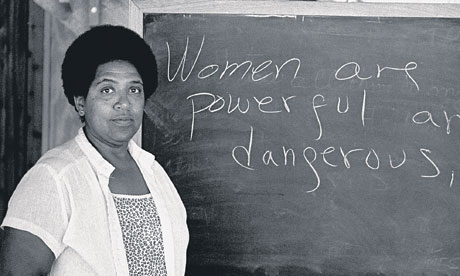
Fear is an interesting thing: the amount you feel is directly relative to the perceived feasibility of the threat to you and your close associates. For white America, the fear of foreign terrorism is salient. Their status as default Americans makes them likely targets for the mentally disturbed subset of extremist ideologues to vent their hatred on.

For black America, the threat of domestic terrorism is much more primary than foreign extremism, the probability of being killed by police in one’s own neighborhood far more tangible than the imagined peril of being blown up by the owner of the local bodega.
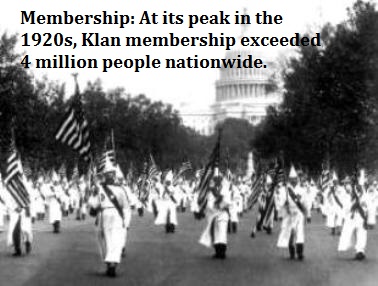

kkk-washington-1920s.jpg

This is MY ISIS, and it’s nothing new.

Your terrorists are hunted down through means ethical and unethical. Ours are placed on paid administrative leave. Think about that for a minute. People suspected of domestic terrorism are actually paid by taxpayers while their involvement is decided.

Yeah, that just happens. Everyday.

Where is the paid leave for Syed Farook? Oh wait, he’s dead.

His voice is just one of the forty I have haunting my brain, the unnamed masses that have been killed by police this month.

Did I say thirty seven earlier? Oh yeah, it’s gone up since I started writing.

I have a friend, a mother figure of sorts, whose nephew was killed by police a few days ago. I went online to find out more details about the case, having heard about it through another friend and not wanting to pry secondhand. I wanted to find his name so I could pray for his family and friends.

Instead, I found forty pair of sightless eyes staring at me in accusation.

As I wrote down the names of these men and women aged 18 to 66, the quiet seething storm of rage began to brew in me.

Prayer was not enough. Writing their names not enough. Blogging (even outside the box), is not enough. Justice, like international terrorism seems a distant dream when faced with stories like that of Robert Hinton, a former Rikers inmate who was awarded a sizable settlement when correctional officers hogtied and beat him for fun.

Hinton’s case led to five firings and nearly half a million in cold, hard cash from the city. Unfortunately, Hinton was killed just blocks away from Rikers, weeks before he was to receive his remunerations check.

He was a father. He was a fighter. He was a nigger.

Only I am too. How am I supposed to sleep knowing the terrorists are out there, laying in wait for me and my people,  with guns and the full support of the United States government?

I can’t. I promised to Choose Change, but in the face of such insurmountable odds, beneath the clouds of structural racism, what woman can see the silver lining?

The forty men and women who have lost their lives at the hands of police in December are victims 1088-1127 since January of this year- eight times the amount of people killed in the Paris attacks. How much more are we supposed to take? Which black body will be the last straw, the spark that sends a deeply racially divided country up in flames?

down the rabbit hole.jpg

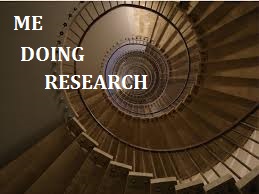
The issue seems too large, and the more I discover, the less I realize I knew. I’m spiraling out, or, as my bestie would say, going down the rabbit hole. I find myself on the FBI vault, reading reports about how white supremacist organizations have been infiltrating police stations since 2006 using a technique the Feds call ‘ghost-skinning’. To further complicate matters, the same prosecutors that depend on police cooperation to win cases are responsible for bringing charges against the very officers who ensure their paychecks.

The system has not been corrupted, it is corrupt. Policing in the United States is rooted in the control and dominion over brown bodies. According to encyclopedia.com, the colonies relied mainly on a system of community policing called night watches.

“In addition to night watch systems, there were sheriffs appointed by the governor and constables elected by the people. These individuals were responsible for maintaining order and providing other services. [Researchers] Nalla and Newman have described the following as problems plaguing colonial cities that were considered the responsibility of police: controlling slaves and Indians; maintaining order; regulating specialized functions such as selling in the market and delivering goods; maintaining health and sanitation; managing pests and other animals; ensuring the orderly use of streets by vehicles; controlling liquor, gambling, vice, and weapons; and keeping watch for fires.”

Note that the primary responsibility of our earliest police officers was to control black and brown bodies. The racial residue from the institution’s inception persists in modern day, reminding me that black and brown bodies have not been criminalized- they are (and always have been) criminal.

The highly militarized tactics we employ in policing black and brown bodies have become the proverbial ‘backfiring gun’ in America’s face. Out of the 1,140  Americans killed by police so far this year, more than half of them were white. Most were Christians. Eighteen were children. This is not Justice.


I’m used to fighting the system. I’ve been doing it all my life. Reality has tempered my idealism to the point where I am no longer surprised by Pyrrhic victories. But I have no idea what to do when the system itself is the problem, when there is no victory, hollow or otherwise, to be had. If White lives don’t matter-- if Jeremy Mardis’ life doesn’t matter, black and brown lives don’t stand a chance.

change cats.jpgI’m ready to give up when a scripture comes to mind: ““Be strong and courageous, and do the work. Do not be afraid or discouraged, for the Lord God, my God, is with you. He will not fail you or forsake you until all the work... is finished.” (1 Chronicles 28:20) .


I chose change and I’m sticking to it if the police it kills me. I don’t have any answers yet,  just a burning feeling in my gut and plenty of questions. I force myself to lay down, zen out, and get some rest before sunrise. I’m going to need it. I’ve got work to do.


12.30.15

I walked away from this hoping that prayer and a steady diet of positive quotes would make things better. I even started another post about women and politics (my number two and three favorites to write about) and why Hillary will never be President.

I had the best of intentions, I promise. But then the Sandra Bland verdict came out. I am reminded of Roxane Gay’s eloquently condemning op ed for the Times last July where she said: “As a black woman, I feel this tragedy through the marrow of my bones. We all should, regardless of the identities we inhabit.”

Two days later, the Tamir Rice verdict was released.

This visceral loss is no longer something I can continue to ‘wait for an appropriate time’ to discuss. I am both unwilling and unable to be that patient.

Writers like Roxane Gay and Ta Nehisi Coates have the cloak of publicity to shield them from recompense when writing about the physicality of racism. Somehow, I doubt my meager readership qualifies as sufficient insulation. So when I speak about Sandra Bland, I do it with full cognizance that I am Sandra Bland, that if I am killed, no justice is forthcoming for my corpse, and that in some ways people will feel that I was asking for it.

I’m going to do it anyway. I’m going to keep at it because while death is a certainty, living free is not.

Thursday, July 7, 2016

... And now, back to your regularly scheduled psychobabble

As the six of you who regularly read my little column may have noticed, I struggle with depression. I was officially diagnosed in 2011, although I probably should have been outed somewhere around 2005.

Anyway, fighting depression is about having the mental discipline to feed your mind only positive information, the physical discipline to exercise your body enough to keep yourself in a constant state of endorphin induced euphoria, and the spiritual humility to beg for mercy and guidance when all else fails.

It’s like being on Paleo while doing a crossfit 30 day challenge.

Except my cheat days generally end with me crying in the shower.

So I apologize if you were totally unprepared for my last post, I was too.

I have been pretty dissatisfied with my life lately and finally decided to stop whining about it and actually do something about it.

I’m thirty one. I know what I think I should be doing right now. Kicking ass at business. Taking names on the dating scene. Changing the world with wry prose and witty peri-apocalyptic romance novels.

Instead, I find myself sitting in the basement, holding a pity party of one, frantically refreshing my Etsy inbox, hoping for a sale.

Well I refuse to squander my gifts any longer, and I refuse to live my life in any kind of box-- not even one of my own making.
An old friend helped me come to this realization on Independence day.

I know what you’re thinking.

And yes, as a matter of fact, we did  go to middle school together.

CK, my gorgeous, crazy, amazingly intelligent and funny Blendian friend has the kind of hair black girls dream about. It’s dense yet fine, soft, with lots of body and fluffy ringlets when air dried.
#hairenvy
No heat damage, thanks 2 GGC


So of course, she loves it when I straighten it.


I’ve gotten a lot better at taming her mane over the past ‘sixteen years. Still, she was in my ‘studio’ long enough for me to decide that I was definitely going to finish growing my hair out, that I had amazing products that truly worked miracles, and that I had to be more aggressive about going after the things I wanted-- in all aspects of life.

So I joined Bumble, made a seven page life plan, strapped on my big girl panties and waded into the murky, questionably toxic bay that is life.

I’m determined to be open. And I actually kind of love Bumble (I already have a date!).

I am taking advantage of the beautiful Cleveland summer by getting out there and participating in as many vending events as possible (I have ten shows this month so far).

Unfortunately, so much time spent living life outside the box gives me considerably less time to write about it, so necessity dictates that either the quality, frequency, or length of my posts will suffer.

I’m choosing length.

I refuse to give up on my writing or squander any of my numerous talents. So while I’m no Polonius, I’m going to give that brevity-is-the-soul-of-wit thing a try.

You’ll get shorter posts, more often.

I’ll get to have a life worth writing about and less shower sob-fests.

It’s a win-win.

Saturday, February 6, 2016

Why everyone (except Tariq Toure) is wrong about Ta-Nehisi Coates, Part One

**This is part one of an I’m-not-sure-how-many-chunks-I-should-break-this-into-for-readability series.


When church member shared Ta-Nehesi Coates’ piece, Bernie Sanders and the liberal imagination with me on January 25th, I initially had this to say:


“Lillian*,


Thanks so much for sharing this with all of us! I enjoyed reading it and found myself challenged on several points as a Bernie supporter. Here's the problem though: Bernie Sanders is not a radical. If Bernie Sanders had run in 1992 or 1996 on the same platform he is pushing now, he would have been viewed as a populist, and life was, by every conceivable metric, better for black America then.


Bernie Sanders advocates for raising the minimum wage to $15/hr, which most of the country supports. But if wages were raised commensurate to the cost of living increased implemented since 1980, minimum wage would be around $25/ hour.


He advocates for making college free, which it is, in the majority of the developed world. Again, this is a populist idea that has been supported on both sides of the aisle.


If he ran in Canada or Great Britain, he would be in the Labour Party. And he would fall slightly right of center on that.


The fact that Bernie Sanders is viewed as a Leftist radical just serves to underscore how far the middle has moved in the past two decades. Ta-Nehisi Coates cites Abraham Lincoln as an example in his article, and while he pays tribute to the President's reluctance to sign the Emancipation Proclamation, he downplays one highly relevant detail of Lincoln's campaign: Abraham Lincoln was seen as a Populist. He gained his primary nomination by being more electable than the 'radical' William Henry Seward.


What we need is a truly radical leftist in the race; someone advocating for $30/ hr minimum wage, free healthcare, college, and graduate schooling, a national review of the legal code, tax code and public educational curriculum, salary caps on all companies who operate primarily on United States soil, reparations for Native Americans, Blacks, and Latinos, immediate release of all imprisoned persons, legalization of all drugs, supervised injection sites, an immediate redirection of 50% of all military spending directly to veterans, the dismantling of any banks that have been in existence longer than twenty years, and a host of other broad, sweeping changes that must be made for America to shift from a 'thing based society to a person based society'.


I guess what I am saying is I agree with the overall point of the article, but not the premise. I think I just discovered my next blog post.”


I was wrong. I was guilty of that infraction of which I so readily accuse others, forming an unqualified opinion. A few days later, pieces started coming out on Jacobin, Mother Jones, and even the Atlantic that had me feeling like I missed a beat, so I went back to TNC, and, sure enough, there was more to the story.


Turns out the piece I read first was just a chaser to wash down the stinging bite of January 19th’s Why precisely is Bernie Sanders against reparations?


There are about thirty reasons why I love this piece, but for your sake, dear reader, I’ll only share three:


  1. TNC is the king of dry delivery clapbacks. Watch him ‘do wut it do’: “Sanders says the chance of getting reparations through Congress is “nil,” a correct observation which could just as well apply to much of the Vermont senator’s own platform.”
  2. TNC drops words like Wayne freestyles-- with the bald faced braggadocio of a man who exists in a league of his own: “if Bernie Sanders truly believes that victims of the Tulsa pogrom deserved nothing...” I’ll save you a click. Pogrom means an organized massacre of a particular ethnic group.
  3. TNC is damn good at his job. A writer thinks before they write. A great writer thinks on the page, edits, and then thinks again. A social thinker writes for the specific purpose of expanding the Overton window on social issues.


Coates does this in both pieces by providing the public with more questions than answers. The proof of his genius is in the twenty plus articles that have come out so far this month on reparations. Agree or disagree, America is talking about something that was still unthinkable in most circles last Christmas.


I remember when our church first considered reading The Case for Reparations. It was in 2014. Our (now) youth pastor had joined the Black History Month committee and she suggested that maybe we should read an article instead of a book.


I was initially taken aback. I felt that after all the wine and cheese book studies and small group dinners I had been subjected to in the past five years, the ‘white folk’ could read a book instead of an article about black life.


That’s the thing about being black in a WASP denomination*. The war is slow and endless, waged over coffee or chardonnay, and every compromise tends to feel like a concession.


An article, no matter how long, felt like a slippery slope to me in 2014. If we read ‘A Case’ that year, what would stop us from reading an even shorter essay the next year? I was certain that by 2020 we would be having a small group dinner discussion on Langston Hughes’ Black Workers. We took a vote. I voted for Henrietta Lacks. I was wrong then too.


Not wrong in wanting to read a book instead of an article. Our snapchat society discourages the growth of print media. Books, even when they are produced, are being read on computer screens and readers with alarming regularity.


**Mini- rant alert:


Have we learned NOTHING for Fahrenheit 451? When books go, society follows in their wake.


Anyway, this year we reconsidered TNC’s controversial essay. In the wake of #TamirRice, we found our racial tolerance stretched thin already, the “litany of black bodies” proliferated by online and cable news outlets pushing both blacks and whites towards an (inevitably violent) implosion. Did we really want to push the envelope by bringing money into the conversation?


That was around the time that it finally clicked for me. Coates, Baldwin, Kitwana, Welsing, Alexander-- even Kendrick and Queen B were all parts of an incomplete analysis, they were all reaching across the ether to tell us, in their way: Change the conversation.


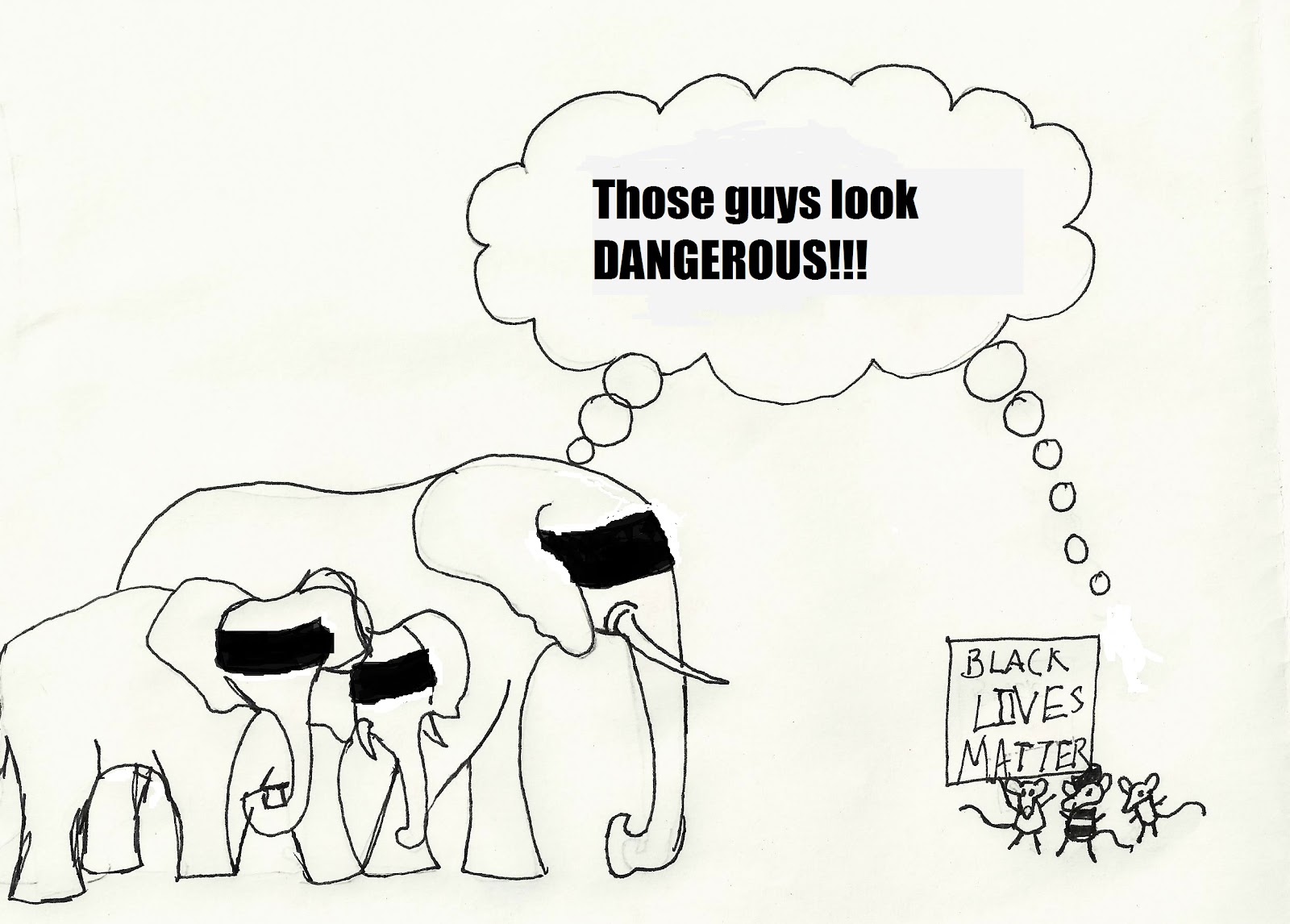
We (black Americans) can no longer afford to allow our white brothers and sisters to stumble through life like a herd of blindfolded elephants tromping through the jungle.


Blind elephants.jpg


James Baldwin’s words from Letter to my nephew, poignantly delivered by Chris Rock at last month’s #MLKNow Livestream keep replaying themselves in my mind:


“You must accept them, and you must accept them with love, for these innocent people have no other hope. They are, in effect, still trapped in a history in which they do not understand. And until they understand it, they cannot be released from it.”


“If the word ‘integration’ means anything, this is what it means: that we, will love shall force our brothers to see themselves as they are. To cease fleeing from reality and begin to change it.”


“We can make America what it must become.”


“We cannot be free until they are free.”


We cannot be free until they are free. We, black, white, brown, and glitter, will never be free having a conversation that is based upon a lie:

We no longer live in a white supremacist society.

... Stay tuned for Part II, coming soonish...

Monday, January 4, 2016

Black Unicorns

Cleveland is experiencing a moment for which I have no words. We live in an age where white armed militants are deemed terrorists and black twelve year olds considered threats. The story of Cleveland is as singular as the story and legacy of structural, race delineated dominance for the purpose of controlling finances is anecdotal.


I have too many words for this moment. And many of them end in -er.


Alas, 2016 is a brand new year, my lovelies, and I do so try to keep my halo polished-- at least until Ostara.


I promised to choose change last year, and I’m sticking with it (at least until Beltane). That means no more complaining about problems without offering practical solutions.


I can’t solve Cleveland right now. To be honest, I can’t even talk about it right now. Tamir struck too close to my heart.


So while I work on getting myself back to optimistic and (somewhat) objective, I’m going to let you in on what drove me to share MYStory in the first place. But before I do that, Audre Lorde is going to give you the words I cannot:


“A Litany for Survival


For those of us who live at the shoreline
standing upon the constant edges of decision
crucial and alone
for those of us who cannot indulge
the passing dreams of choice
who love in doorways coming and going
in the hours between dawns
looking inward and outward
at once before and after
seeking a now that can breed
futures
like bread in our children's mouths
so their dreams will not reflect
the death of ours:


For those of us
who were imprinted with fear
like a faint line in the center of our foreheads
learning to be afraid with our mother's milk
for by this weapon
this illusion of some safety to be found
the heavy-footed hoped to silence us
For all of us
this instant and this triumph
We were never meant to survive.


And when the sun rises we are afraid
it might not remain
when the sun sets we are afraid
it might not rise in the morning
when our stomachs are full we are afraid
of indigestion
when our stomachs are empty we are afraid
we may never eat again
when we are loved we are afraid
love will vanish
when we are alone we are afraid
love will never return
and when we speak we are afraid
our words will not be heard
nor welcomed
but when we are silent
we are still afraid
So it is better to speak
remembering
we were never meant to survive.”


My name is Ajah Hales and I have been a published author for twenty-one years. This is no small feat, considering I'm only thirty.


Although I knew practically from the moment I picked up a book that I wanted to become a writer, it took me a while to find my voice. I spent most of elementary school composing mediocre poetry, progressed by secondary school into sophomoric narrative dramas, and by college was firmly ensconced in the incense-and-patchouli world of Spoken Word.


I was art imitating life, forcing my talent into ready made molds which fit my perception of what a writer should be. Fortunately, as an English major, I had plenty of opportunities to learn the difference between mien and metier.


I took a break from writing in my mid twenties to travel the world and live the seldom glamorous, oft dangerous life of a community organizer. Living and working with individuals who had been marginalized into the fringes of mainstream society helped me gain a level of maturity, compassion, and depth that was previously lacking in both myself and my writing. I came into an understanding that the changes necessary to create an egalitarian American society were in direct juxtaposition to the values that epitomize the American Dream.


I realized that my peculiar combination of life experience and writing prowess qualified me to do something that no one else could-- to speak in a voice no one else could use.


I recognized that I could reach more people from my computer than I could knocking on doors and marching in the street, so I stopped organizing and started creating change.


Now I blog about life's quirks, quandaries, and crossroads at MYStory:  A Blog Outside the Box. I write brutal truths packaged in palatable bytes on Twitter (@glcworldtalk), and still, on occasion, knock on doors and march in the street.


Hey, at least it beats the alternative:


"This is slavery, not to speak one's thought" ~Euripides